

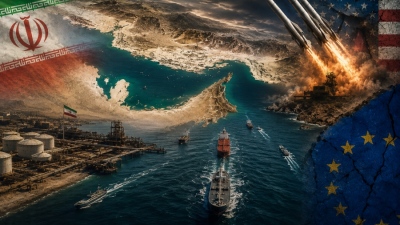
There are certain points on the global map where geography is transformed into power. The Strait of Hormuz is perhaps the most characteristic example. Whoever controls this passage does not merely influence navigation in the Persian Gulf; instead, they acquire a potential lever of pressure with global economic and geopolitical implications.
Behind the daily news of oil tankers, military maneuvers, and fluctuating oil prices, a much deeper process is unfolding: the transformation of geography into a geoeconomic tool capable of affecting not only energy markets but also political decisions, trade relations, supply chains, and potentially the very architecture of the international system.
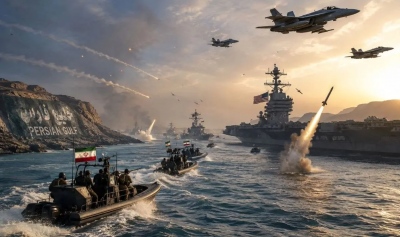
For these precise reasons, following the 40-day war unleashed against it by the US and Israel, Iran rushed to seize the opportunity and assume sovereignty and control of the Straits. This is why Tehran is determined to carry its military confrontation with the Americans to the very end. The Iranians know that if they manage to maintain control of the Straits, Iran will indeed be counted among the global superpowers.
Researching the geoeconomics of the Strait of Hormuz
The investigation of the geoeconomics of the Strait of Hormuz requires the integration of several theoretical concepts. First, the Strait constitutes a global energy chokepoint where the concentration of energy flows creates a critical vulnerability.
Second, its control constitutes an application of geoeconomic power—the ability of a state to influence the outcome of global competition through economic levers. Third, the very nature of the relations between Iran and the international community fits into the paradigm of transit regimes—historically shaped patterns of exploiting dependency in international trade.
Finally, the current situation represents the most characteristic example of the weaponization of maritime chokepoints—the conversion of geographical positioning into a tool for exerting asymmetric pressure. The geopolitical significance of the Straits far exceeds the energy issue itself, affecting the entire spectrum of regional security and the balance of power in the Persian Gulf.
The Strait of Hormuz in the global structure of key maritime corridors
From the perspective of geoeconomic analysis, the Strait of Hormuz holds a unique position in the global architecture of maritime energy routes. According to 2025 data from the U.S. Energy Information Administration (EIA), 20.9% of global maritime transit of crude oil and liquid hydrocarbons passes through the Straits, making it the second most important chokepoint after the Strait of Malacca, which holds a 23.2% share. As the renowned economist Daniel Yergin points out, as early as 2011, the Straits were characterized as the number one chokepoint for global oil supplies.
The sole maritime exit from the Persian Gulf
However, unlike the Strait of Malacca, which distributes flows between the Indian and Pacific Oceans, the Strait of Hormuz constitutes the only maritime exit from the Persian Gulf—a region where the primary exporting capacities of OPEC countries are concentrated. This means that for Saudi Arabia, Iraq, the United Arab Emirates, Iran, Kuwait, and Qatar (regarding liquefied natural gas – LNG), there are essentially no viable alternatives to the Strait of Hormuz.
Alternative routes are insufficient
The alternative route via the Cape of Good Hope—through which 9.1% of global maritime oil transit passed in 2025—lengthens the journey by thousands of nautical miles and renders transportation economically unviable. The Suez Canal (4.9% of global maritime oil transit in 2025) and the Bab el-Mandeb Strait (4.2% of global maritime oil transit) complement the East-West connectivity system but are unable to substitute for Hormuz.
The valve of global energy security
The figure of 20.9% does not merely represent a transport volume, but the structural, irreplaceable importance of the Straits. A blockade would not lead to a redistribution of energy flows, but to a collapse of the maritime supply system from the entire Persian Gulf. This makes the Strait of Hormuz not just a chokepoint, but the valve of global energy security.
According to estimates by researchers at the Complexity Science Hub Vienna, a prolonged closure of the Straits could affect annual trade flows valued at approximately $1.2 trillion USD originating from the exporting countries of the Persian Gulf. Figure 1. Global structure of major maritime corridors and volumes of crude oil and liquid petroleum products transported through them in 2025. Special significance of the Strait of Hormuz as a percentage of the global volume of oil transported by sea. Compiled by the author based on 2025 U.S. Energy Information Administration data and Vortexa tanker tracking data.
Analysis of transit volumes through main maritime chokepoints
Analyzing the volumes of crude oil and liquid petroleum products transported through key maritime chokepoints during the 2020–2025 period allows for the identification of long-term trends and the evaluation of the resilience of the Strait of Hormuz as a geoeconomic artery. According to data and the processing of tanker tracking information from Vortexa, absolute transit volumes through the Strait of Hormuz showed a steady increase throughout the examined period: from 2020 to 2025, the index rose from 17.0 to 20.9 million barrels per day, corresponding to a 23% increase. In relative terms, the share of the Straits in the global maritime transit of energy carriers remained stable at the 20% to 21% level.
The Straits strengthened their position
In 2025, the Strait of Hormuz not only maintained but also strengthened its position as the second most important chokepoint after the Strait of Malacca, despite geopolitical turmoil (escalation surrounding the Iranian nuclear program, attacks on tankers, and sanctions pressure). In contrast, transit volumes through alternative routes—primarily the Cape of Good Hope and the Suez Canal—exhibited greater volatility, indicating their role as backup corridors used during periods of temporary disruption. In the case of the Strait of Hormuz, no substitution effect is observed; even with increased transport through the SUMED pipeline (Suez) and the Cape of Good Hope, absolute transit volumes through the Strait of Hormuz continued to increase steadily.
Irreplaceable passage
This empirically confirms that the Strait of Hormuz is not simply a chokepoint, but a structurally inelastic component of the global energy system. Its share of 20% to 21% is strictly determined by the geographic location of the Persian Gulf fields and the absence of economically comparable alternative solutions. Attempts to bypass the Strait of Hormuz face fundamental economic rather than technological constraints: bypassing via Africa increases transit time by 15–20 days and chartering costs by 30–50%, making this option strictly an insurance solution rather than a competitive alternative.
The geography of demand for energy resources transiting Hormuz
The flows of crude oil and liquid hydrocarbons through the Strait of Hormuz are characterized by a highly pronounced asymmetry. According to calculations based on data from the U.S. Energy Information Administration and Vortexa tanker tracking data, the transit volume through the Straits in 2025 amounted to 20.9 million barrels per day. The distribution of these quantities by destination country demonstrates the dominance of Asian economies. The largest importer is China, at 5.4 million barrels per day (25.8% of the total transit volume). Second in importance is Saudi Arabia, at 5.6 million barrels per day (26.8%). However, this specific volume does not represent imports but rather re-exports or transit through the Straits to other countries, which requires clarification when interpreting the data.
Similar volumes are presented by:
-
India — 2.0 million barrels per day (9.6%)
-
South Korea — 1.7 million barrels per day (8.1%)
-
Japan — 1.7 million barrels per day (8.1%)
-
Other countries of Asia and Oceania — 2.3 million barrels per day (11.0%)

Asia claims 90% of oil flows
In total, Asia accounts for 86% to 90% of all oil flows passing through the Strait of Hormuz. In contrast, Europe and the United States account for only 0.6 and 0.4 million barrels per day respectively (totaling less than 5%). Consequently, the Strait of Hormuz is not merely a chokepoint of the global energy system, but predominantly an Asian chokepoint, a fact that must be considered when designing scenarios of geoeconomic influence and pressure. The above data empirically confirm the core premise of geoeconomic analysis: the dependence of the Asia-Pacific region on the Strait of Hormuz is structural in nature.
Dependence
The Iranian strategy of asymmetric influence on global energy markets through the threat of blockading the Strait of Hormuz is one of the most effective examples of leveraging geography in geoeconomic competition. China, which receives more than 45% of its oil imports through the Straits, and India, whose corresponding percentage is entirely comparable, fall into the classic trap of depending on a single transit route.
The absence of alternative routes with equivalent transport capacity leaves these nations highly vulnerable in the event of a blockade of the Straits. As a result of recent events, Asian economies were the first and hardest hit, forcing regional governments to impose restrictions on car usage and reduce the working week.
The burden falls on Asian consumers
The disproportionately small share of European and American imports (less than 5%) means that the geoeconomic consequences of a crisis in the Straits will be unevenly distributed: the primary burden of the cost will be borne by Asian consumers, while Western economies will be affected mainly through secondary impacts (surges in global oil prices, supply chain disruptions).
According to researchers' estimates, the impact on European Union countries amounts to approximately $50 billion USD, a relatively small figure compared to Asian economies. In this context, the need to adapt Russian policy to the changing reality of the Middle East acquires particular importance.
The role of Russia
Iran remains a key strategic partner for Russia in the region, and deepening trade, economic, and military-technical cooperation—including securing transit through the Strait of Hormuz—serves the long-term interests of both nations. Moreover, a direct military conflict between Iran and the United States, as well as between Iran and Israel, radically alters the geopolitical landscape of the Middle East. Russia cannot remain indifferent, given that regional stability directly impacts global energy supplies, including those heading to Russia.
Previously, when assessing the consequences of Iranian President Ebrahim Raisi's death in May 2024, the stability of the Iranian political system and its ability to maintain control over key geoeconomic levers—including the Strait of Hormuz—even during periods of domestic political turmoil, was clearly highlighted. In the long term, the time has come for Russia and Iran to lift existing banking and transit barriers and elevate bilateral cooperation to a qualitatively new level. Figure 2. Transit of energy resources through the Strait of Hormuz to various countries in 2025, in millions of barrels per day. Compiled based on 2025 U.S. Energy Information Administration data and Vortexa tanker tracking data.
China, Japan, and India in a vulnerable position
In this article, the phenomenon characterized as "classic Hirschman concentration dependency" is interpreted as a set of conditions under which key net importers of hydrocarbons (such as China, India, Japan, and South Korea) find themselves in an extremely vulnerable position. This vulnerability stems from the fact that a significant portion (over 30% to 40%) of their imported oil passes through the Strait of Hormuz.
At the same time, alternative transport options—whether bypassing via the Cape of Good Hope or utilizing existing pipeline infrastructure—are either unavailable or not economically viable to meet immediate operational needs.
They cannot stop Iran
The military aggression by the United States and Israel (in June 2025 and February 2026) confirmed that the Islamic Republic currently possesses the political, military-technical, and scientific-technological potential to effectively resist the aggression of the two most powerful militaries in the world. Furthermore, Iran is capable of delivering a crushing blow to US interests in the region and inflicting unacceptable losses directly upon Israel. This means that the sole hegemon of our era, even alongside its partners, is unable to use military means to prevent Iran from defending its geopolitical interests in the region.
Anxiety in the Middle East and Persian Gulf
This factor causes intense anxiety among the leadership of Middle Eastern states and the monarchies of the Persian Gulf. In the immediate future, these countries will need to decouple from the United States and pursue a course of genuine, good-neighborly relations with Iran. A shift in the geopolitical course of these states will inevitably lead to the closure of all US military bases and infrastructure in these regions, as well as the termination of all relations between these states and Israel.
The fourth superpower
The unprecedented weakening of US influence over the countries of the Middle East and the Persian Gulf will be accompanied by a corresponding increase in Iran's influence in these areas.
In a word, these conflicts mean that a new, fourth superpower is emerging before our eyes—Iran. The consequences of this development may, in the near future, trigger tectonic shifts in global geopolitics.
A lever of pressure on 40% of the global economy
As a result, Iran, by exercising control over the Strait of Hormuz, acquires geopolitical leverage over 35% to 40% of the global economy, and directly over major economies such as China, India, Japan, and South Korea. Should it wish to, Iran, possessing powerful levers of influence, can dictate political terms to these and other countries (such as lifting bilateral sanctions, restoring normal banking and financial relations, coordinating joint actions on the international stage, etc.), which these countries will sooner or later be forced to accept to secure their energy supply and protect their economies.
The Strait of Hormuz as a digital chokepoint
The Strait of Hormuz also constitutes a critical node of global digital infrastructure—not only a bottleneck for global oil transit, but also a digital chokepoint. At least seven major submarine telecommunication cable systems are laid along the seabed of the Straits, including FALCON, AAE-1, TGN-Gulf, SEA-ME-WE (various systems), Gulf Bridge International / IMEWE, and the Oman Australia Cable. These cables lie at a depth of approximately 200 meters, which technically facilitates the possibility of interfering with them.
If cut simultaneously
As the Iranian news agency Tasnim points out, "if, for any reason, several of the main cables in the Strait of Hormuz are cut simultaneously, a digital catastrophe will shake the Arab states of the Persian Gulf." A critical percentage of global internet data traffic passes through the Strait of Hormuz.
According to various estimates, between 15% and 30% of global data traffic could be affected in the event of cable damage in the Straits, while up to 97% of intercontinental internet traffic is carried overall via undersea cables. The vulnerability of user countries exhibits a highly asymmetric character.
Digital disaster
In the event of a hypothetical blockade or sabotage, the loss of internet connectivity would reach:
-
70–90% for the Persian Gulf states (United Arab Emirates, Qatar, Bahrain, Kuwait, and Saudi Arabia)
-
30–40% of western internet traffic for India
-
50–60% for Pakistan
-
40–50% for East Africa

The least vulnerable
At the same time, Iran itself, possessing land-based alternative routes, remains the least vulnerable. Repairing damaged cables in a combat zone requires five to six months (as shown by the precedent in the Red Sea in 2024), while the simultaneous disruption of two or three of the seven cables is capable of causing a cascade collapse of the entire system due to overloading of the remaining lines. From a theoretical standpoint, this phenomenon expands the scope of the concept of geoeconomic power and its modern operational expression as the weaponization of maritime chokepoints.
Digital valve of the energy system
Iran, by possessing asymmetric military means (retaining, after two wars, about 60% of its fast attack craft despite significant losses to its main fleet), gains the ability to affect not only oil but also digital flows. Consequently, potential attacks against submarine cables will signify an escalation of the conflict, transitioning to a new level—a war for the control of information flows. Control of the territorial waters of the Straits is transformed into a lever of pressure over the digital dependence of the Arab monarchies and South Asia, converting the Strait of Hormuz from a valve of the petroleum system into a digital valve of the global energy system.
Conclusions
It is widely accepted that the characteristics of a superpower notably include the possession of a nuclear triad and a powerful economy capable of influencing global commercial and economic processes. According to this analysis, Iran may acquire these exact characteristics in the very near future. The Strait of Hormuz, the Bab el-Mandeb corridor, and global digital infrastructure are far more important than any nuclear triad on its own. With full control over the Strait of Hormuz, dozens of countries will begin, one after another, to lift bilateral sanctions and develop active cooperation with the Islamic Republic. With the lifting of sanctions and exit from international isolation, the Iranian economy will grow at a rapid pace. The country will strengthen its political influence and develop its "soft power" tools, enabling it to shape the international agenda and influence decisions through diplomacy, international organizations, and alliances. All of the above, as noted, is not a distant possibility, but a reality of the immediate future.
www.bankingnews.gr



Σχόλια αναγνωστών